

Three is Not Better Than one
With the increased professionalism of veterinary practice there is much less of the old backyard manufacturing of pharmaceuticals, generally resulting in higher quality products that are under the auspices of regulatory authorities.
Back in the day it was common practice to include two or three different sulphonamides in veterinary powders, not to increase efficacy but reduce overall toxicity. The advent of trimethoprim in the mid-20th century obviated the need for that, resulting in highly efficacious and safe therapy. An historic case of three not being better than one.
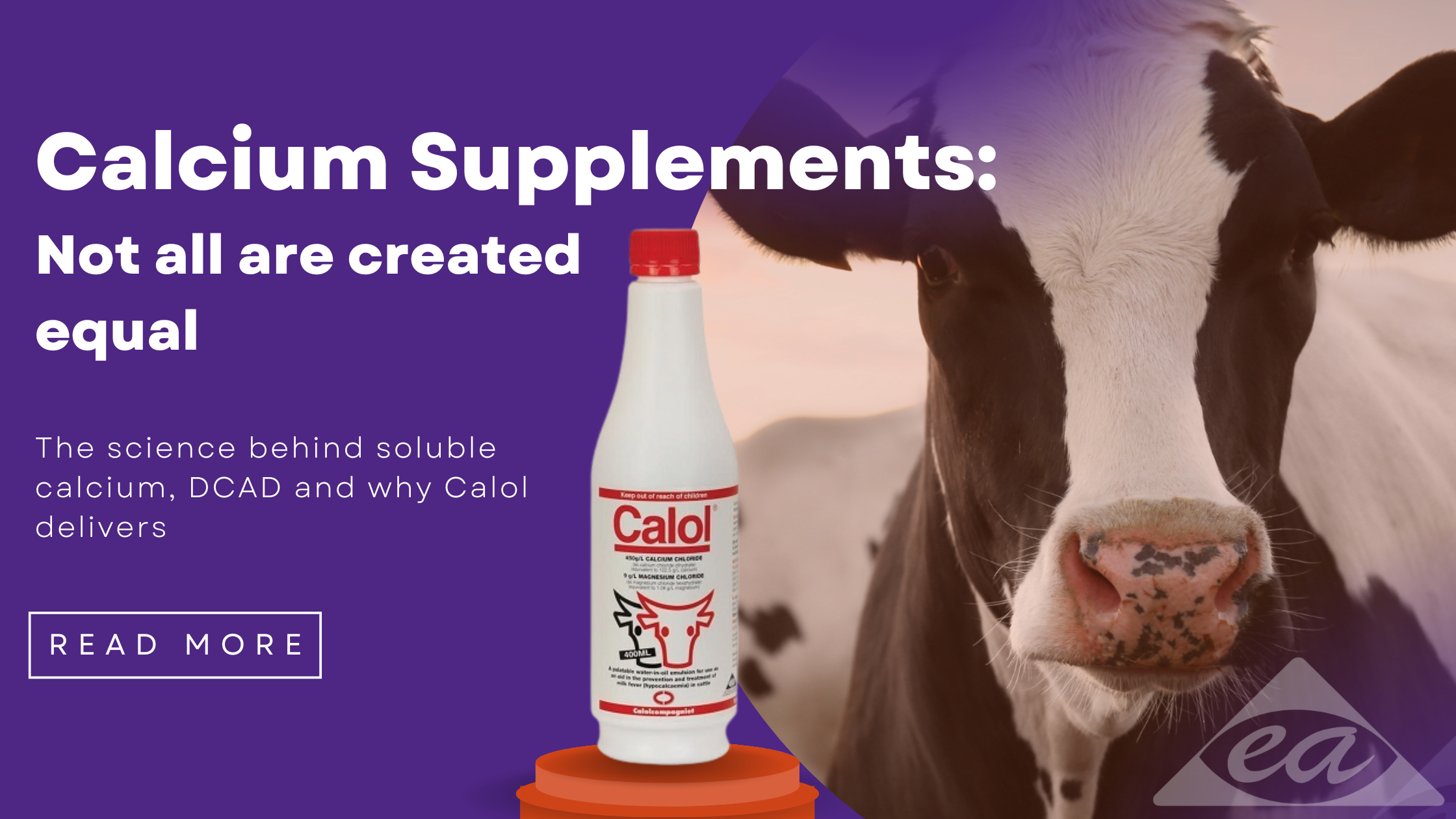
We now see unregistered calcium supplements flooding the veterinary market with the same false premise, that three is better than one; not so, especially when the purported calcium salts are almost totally insoluble.
Tricalcium phosphate (Ca₃(PO₄)₂) is a versatile calcium salt primarily used as an anti-caking agent, and texturizer. Naturally present in human bones and teeth, it is practically insoluble in water and insoluble in ethanol. Calcium carbonate (CaCO₃), or chalk, is also practically insoluble in pure water.
Although widely used in supplements neither of these salts is soluble enough to be of value in treating a cow with clinical hypocalcaemia.
The only salt of any therapeutic value is calcium chloride, which is highly soluble and absorbed by passive diffusion. Paradoxically it is the chloride ion, not the calcium that is responsible for the rapid therapeutic effect. By being more rapidly absorbed than the much larger calcium ion it drags through a similarly small hydrogen ion to maintain electrostatic balance, hence altering the DCAD of the cow and mobilising body calcium. Insoluble calcium salts will have zero effect on DCAD. They may be cheap, but they are not cheap if they do not work.
The major issue with calcium chloride is that, in common with most calcium salts, it is highly irritant to mucosa. This is negated by the salt in Calol being emulsified in oils allowing a highly effective 45% concentration to be made available. Backyard preparations attempt to reduce irritation by having a low, ineffective amount of 5% with insoluble salts taking up much of the slack.
There is also a propensity for ‘shotgun’ therapy, trying to be all things to all men. This is done by throwing in a token amount of magnesium, propylene glycol and ‘electrolytes’, for marketing purposes, so that the result is more like an obsolete blunderbuss rather than a shotgun.
There is a reason why Calol is a registered animal remedy rather than just another backyard production, that is because its claims have been evaluated by regulatory authorities in several countries and justified by sound science.
Dennis Scott BVSC MANZCVS (Veterinary Pharmacology)
Leave a Reply